

About Worthwhile Adventures

Worthwhile Adventures is the moniker given to the Anabaptist-rooted church work Alisha and Joshua Garber found themselves called to in 2010.
Their journey together began in college, united by a shared calling to serve and love people across cultures. Over the past two decades, this calling has led their family to unexpected places — Mexico, the Czech Republic, Lithuania, and Barcelona — each shaping their understanding of faith and community.
Now, with over ten years of experience in postmodern, post-Christendom contexts, the Garbers are preparing to serve with Mosaic Church in Glasgow, Scotland, where they will also continue building relationships with communities across Scotland and Ireland. They are eager to engage with the local community, fostering relationships and nurturing a faith that resonates in today's world.
Their connection with Communitas International began in 2023, drawn by a mutual commitment to starting and shaping communities of faith that love like Jesus. This partnership has enriched their mission, providing support and a network of similar-spirited individuals.
Fun Fact: The Garber family has a tradition of learning local dishes in every country they live in. Their favorite so far? Lithuania's cold beet soup, Šaltibarščiai!
Meet the Garbers


-
I'm Alisha Garber — a force of faith, creativity, and leadership with a heart for people at the margins. With 10 years of military service and another 10 years serving as an international faith worker in the Czech Republic, Lithuania, and Spain, I’ve truly lived out a calling to bridge cultures and inspire communities.
With 22 years of ministry experience, I’m especially passionate about mentoring the next generation of faith leaders — helping them grow into dynamic young changemakers who are ready to impact the world. As a creative artist, I use my unique gifts to fuel a radical ministry at the margins and radical inclusion at The Table.
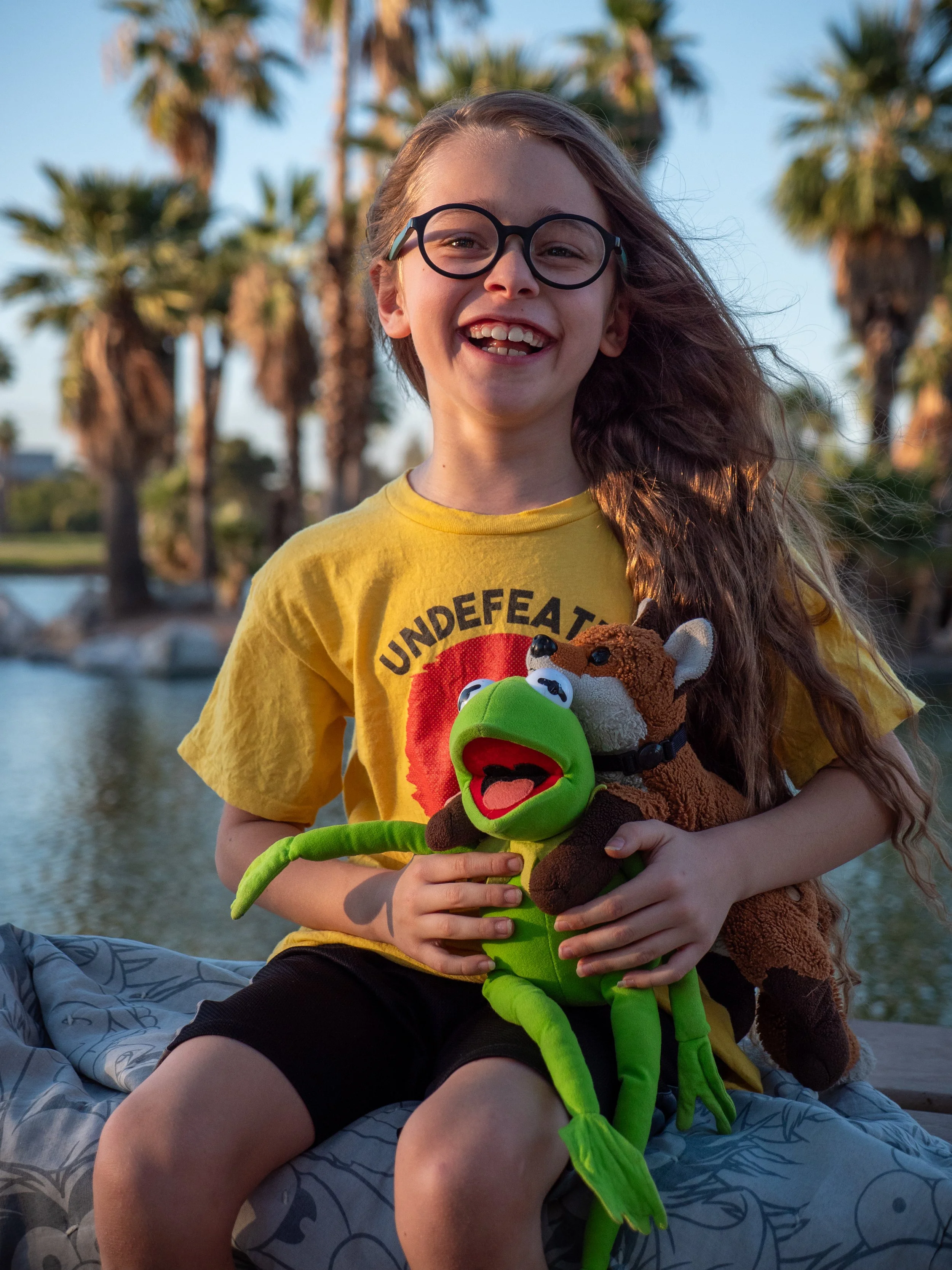
When I’m not leading, teaching, or creating, I’m a bombastic wife to Josh of nearly 20 years, a mama to our energetic son Asher, and a dog mom to our mutt Merlinda. Together, we’re a family on a mission to share the story of Jesus with the world, one act of love at a time.
Fun fact: I'm the world's biggest Muppet fan — no contest.
-
I'm Joshua S. Garber — a storyteller, worship leader, theological thinker, and family man passionate about helping communities explore how Jesus-centered faith can lead to peace, justice, and belonging in a fragmented world.
My family and I have served in Mexico, the Czech Republic, Lithuania, and Spain, experiencing the beauty and tension of post-Christendom contexts. These cross-cultural experiences have deepened my conviction that the Sermon on the Mount is more than inspiration — it’s instruction. Over the years, that understanding has led me into work that combines activism, relational ministry, youth discipleship, and the creative arts.
I’m energized by creative ministry: leading worship that speaks to the soul, filmmaking and crafting words that connect with people’s lived experiences, and encouraging others to wrestle faithfully with hard questions. I believe hospitality, humor, and a well-cooked meal can be just as theological as a sermon.
Fun fact: The best football team is Liverpool FC.
-
Born in Klaipėda, Lithuania, Asher is known for his jovial personality, winning smile, and ability to eat his weight in watermelon.
His name straddles his parents’ love for nature and the Bible, with an ash being a type of tree and Asher being one of Jacob's sons and a tribe of Israel. Asher’s middle name is in reference to Saint Francis of Assisi, who is known for his love of nature, critique of capitalism, objection to violence, and vitally important efforts in reforming the early Christian church.
Asher wishes more people in the world were vegetarians like him and, until recently, thought squirrels were mythical creatures.
Currently, his interests include reading, Pokémon, riding bike, and swimming.
Why Scotland?
Europe is often not the first place people picture when they hear the term “global missions.” In fact, Scotland was a leader in sending missionaries around the world in the early 20th century.
In 2025, we interviewed three people in Scotland who paint a dynamic picture of how things are changing — for better and for worse — in places where the church has “come and gone.”
-
Voiceover
One would be forgiven for thinking that the church is doing fine in Scotland.For centuries, Christianity's reach spread far and wide throughout the United Kingdom.
In fact, if you were to visit, you'd find you're never too far from a beautiful old church building with an inspiring history.
Andrew
Here in Edinburgh, we joke that churches are kind of like Starbucks where there's one on every corner and sometimes one in the middle, but often in the city center you walk around these churches and they've closed.And so kind of the joke is, well, that that church is a community center. That church is a skate park. That church is a climbing gym, or that church is a bar.
And sometimes that's meant some people have been very creative about using churches for cafe spaces or art spaces, and still having vibrant worshiping communities in the midst of that.
But others are sadly just closing.
Andrew
In the year 1910, Scotland hosted the World Evangelism Conference, whose tagline was, “To see the evangelization of the whole world in our lifetime.” And so Scotland has in many ways been a leader in evangelism in the global church, with Christianity and planting churches and setting up missionaries.Andrew
[Animated graphic showing a top-down church view starting with 100 circles and decreasing to 2]But unfortunately, in the last 100 years or so, you've seen just a steady decline of people who identify as Christian or, maybe who still identify as Christian culturally, but don't reflect it in terms of their lifestyle choices. The estimates now are about 2% of people in the nation of Scotland are regular church attendees.
Andrew
So 2% of the population of any country actually makes that, technically, an “unreached people group.”Voiceover
In especially affected areas, sectarian and societal divides are the result of religion and politics being both interlocked and set at odds.Robin
Why Glasgow?So there's two sides to the city. So on the one hand, it has an incredibly vibrant cultural scene, whether that's music, whether it's the arts, whether it's science. It's in lots of ways a really vibrant, bangin’ place with unbelievable warmth.
Like, if you go on a bus, please expect people to speak to you because they're gonna. They'll talk to you, they'll be interested and they will want to know about you, they’ll want to help you.
But it also has some of the largest social problems anywhere in the UK. So in the area I live in, there are literally abandoned streets. One bent lamppost with one bulb and the whole street, but most of it's desolate anyway and no one lives there.
Just down the hill, there's a set of stairs that literally will take you nowhere. People start them, they go up and they literally just takes you to a stop.
So there are whole landscapes of like deprivation and neglect. And that's, not unusual.
Voiceover
In Scotland, concentrations of poverty in places like Maryhill show a significant life expectancy gap between most and least deprived areas: about 10.5 years for females, and 13.2 years for males.This is due to inequalities found across income, employment, education, health, access, crime, and housing.
Robin
We're obviously known for crime, as well and things like sectarian problems. Yeah, I would say so. So there's a lot of that as well. And I mean, a lot of that. But there's also a fantastic community spirit where people will band together and they will be a living, breathing presence for something else.You have a lot of both all in the one city. And I remember a comedian saying, “It's the city where you're most likely to get stabbed, but they're obviously the most likely to get you to an ambulance or put you in a cab as well.”
So, I love Glasgow.
Voiceover
In polarized spaces where many churches double down on old formulas for "doing church," there is a counter current of communities being drawn towards the compelling alternative found in the hope-filled, Jesus-centered faith offered by the Anabaptist Mennonite tradition.This tradition was once a fringe movement, persecuted by Catholics and Protestants alike. Now it has become an avenue of reconciling people with their longing for Jesus and Christian community, despite distrust of organized religion.
Mosaic church, who have found their way into the Anabaptist Mennonite story, embodied this type of presence in Glasgow.
Robin
Who are the people who come? Maybe the rejects? They're the kind of folks who they've either rejected church or church has definitely rejected them for some reason or another, who've looked for a life raft or somewhere where they can do things.Like they're actually allowed to think, you're actually allowed to question and doubt. You're actually allowed to explore your faith. You're not going to be put in a box or put to a side, or given a label
Viola
I would say we've got probably quite a few people that are neurodiverse, and therefore maybe don't always fit into spaces like where you have to act in a certain way. I think we're quite welcoming to that and we can make allowances for that. Like if somebody is quite noisy, that's maybe less disturbing with us than it is somewhere else.So we've got those kind of people. And then I would say there are a lot of people who just got really hurt in church before, and some people say that Mosaic is their last chance at church. Like, if that doesn't work out, they wouldn't go anywhere else.
Robin
Well, I didn't plan to be in Mosaic. I had renounced faith at that point and was on the way out. But I had a friend speaking at Mosaic for the first time after the death of his boy about what faith might mean to him now.I went and the whole meeting was a disaster from top to bottom. We were locked out of the building. The couple who were in charge at that time were having a fight in the street. And I loved all of that because it meant no one was paying any attention to me.
We did end up going to their home, with one of them in a decided huff and one of them victorious. And, yeah they worshipped and something in my heart broke, and I've not left yet. That was 20-something years ago, so...
Viola
I guess we are valuable, but I-- Just on the ground, it feels very messy and very often very frustrating. So, yeah, think of us as something very real and grounded. Not some sort of amazing vision that is perfect. We’re in no way that.Voiceover
Mosaic isn't excluded from many of the challenges that churches across the UK and Europe face. For one, most ministry work is voluntary or bi-vocational, and the capacity of church leaders is not as great as the needs encountered.Viola
A lot of us don't have very much time. We're all very busy. People with families have so much going on. In the past, we've had people working with refugees. I think there were quite a few people who had a real heart for homeless people, talking to them and encouraging them and supporting them in some ways.We don't have a Mosaic charitable activity that we all do together at the moment. We all kind of do our own little things.
Voiceover
That's where we come in.Tapping into our cross-cultural ministry experience, our family will be a useful, full-time resource that could lend a much-needed helping hand.
Mosaic has invited us to help in several key areas. Areas where God has been shaping and preparing us since our worthwhile adventure began in 2010.
We extend hospitality and facilitate a table ministry, small groups and Bible studies, and we engage the local neighborhood.
We develop and lead creative worship in a way that empowers the community and fosters greater participation.
We grow ministry elements oriented towards children, youth, young adults, and anyone else God puts in our path.
We will enter Glasgow for a season of missional listening. As we lend a hand and build trust, relationships, and resources, we will look for where the Holy Spirit is already at work.
Viola
It would be a bit of a shock if somebody came and suddenly did lots of things to engage us. So it would be really important to just come and be part and get to know and join the things that are already there, and then see what kind of evolves out of that.Voiceover
In joining what God has already been doing, the desire is to see Mosaic grow in its capacity. That they may shepherd and guide folks who won't set foot in a conventional church building, but are utterly compelled by Jesus.Andrew
To be in a community, in a place where people are saying, “We really want to think differently about the church and what it means to be the church,” it's fun. It's fun, and it's exciting because we get to use every part of our divine imaginations to just dream about something that's better. Something that represents the love of God and the beauty of God and the justice of God in a way that is new.These European cities like Glasgow, I mean, this is really a frontier in global mission where we have to think about what it means to be the church in places where the church has come and gone, and now we need to explore what it means to be the church.
Voiceover
None of this can happen without prayer and financial support. We're building a team of partners to support this ministry. Prayer partners and financial partners. A team that sees how God is moving in Scotland and wants to join in.Being financially supported is how we have a full-time capacity to bring hope and light to our neighbors in Glasgow.
That's where you come in. Would you partner with us on this worthwhile adventure?
Frequently Asked Questions |
Worthwhile Adventures
Our lives have not moved in a straight line and we get a lot of questions. Whether you’re new or just have been away for awhile, here’s some background that should help fill in the gaps.
-
The term Worthwhile Adventures originated during Joshua and Alisha Garber’s first cross-cultural experience serving in the Czech Republic. It has become a container for the type of postmodern, post-Christendom ministry they’ve engaged in over the years.
The Worthwhile Adventures website is the ministry site and personal blog of the Garber family, sharing stories of faith, mission, and everyday life as they follow Jesus across borders and cultures. They write about peacebuilding, spiritual formation, and life as a family serving in international contexts.
Worthwhile Adventures is not a travel agency or recreational travel blog.
-
At the moment, we are based out of Phoenix, Arizona, while we prepare for what comes next: serving in Glasgow, Scotland. We have accepted an invitation to serve with Mosaic Church (Glasgow) and are partnering with Communitas International as our sending organization.
We are in an active season of fundraising, visa planning, and relationship-building. No matter where we are, our ministry work focuses on:
Cultivating faith communities and liminal spaces
Faith-based reconciliation
Community engagement
Storytelling through the arts
-
We believe mission is less about programming and more about presence. Our work includes:
Building relationships across cultural and religious divides
Supporting peace and reconciliation initiatives
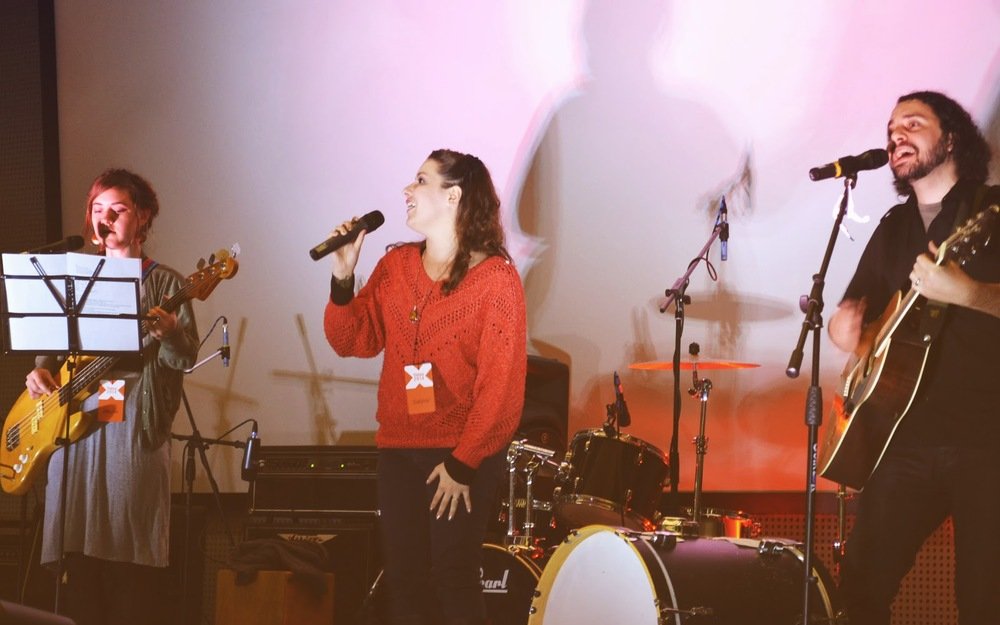
Creating art, making music, and telling stories that encourage Christ-centered community
Participating in local worship, youth mentoring, and hospitality
Building safe, inclusive spaces for those who don’t feel comfortable with the institutional church but are interested in following Jesus
-
For several years, we shared about discerning a call to serve in Belfast. At the same time, we’ve continued listening and discerning, and it’s become clear that’s not what comes next.
We are preparing for a season starting in Glasgow, Scotland, working alongside Mosaic Church, which is the wisest next step for both visa and ministry reasons. This partnership creates a lawful pathway for us to apply for the appropriate visa (within the United Kingdom) and provides a context where we can learn and serve as soon as we are able to be present.
Northern Ireland is not permanently off the horizon — before COVID, Mosaic had even been exploring the possibility of nurturing a community there, and building collaborative Celtic relationships is part of the role we are preparing for. However, we will also continue to move forward with discerning spirits and are committing to serve faithfully wherever we are asked to invest our lives.
Our move will proceed once visa arrangements are confirmed and monthly partner support is in place. -
Mosaic Church is a vibrant, missional church community in Glasgow, Scotland, with a heart for welcoming everyone to the Table. Their commitment to creativity, inclusion, and spiritual formation resonates deeply with our vision.
Partnering with Mosaic gives us a supportive community as we learn, serve, and build relationships in Scotland.
-
A missionary-in-residence is someone who lives among a community to learn, support, and minister in a grounded, relational way.
We’ve previously served as missionaries-in-residence in Barcelona, Catalunya, and currently at Hope House Farm in Phoenix, Arizona.
-
Communitas International is a global church-planting movement focused on helping ordinary people live out the gospel in their neighborhoods. Our family partners with Communitas as our sending organization for ministry in the United Kingdom.
-
You can support our ministry in several ways:
Pray for the fundraising, for visas, and for relationships we’re building in Scotland and Ireland
Subscribe to our newsletter for updates
Give financially through our Support Page
Share our stories with others who care about peacemaking and global church work
Connect — if you have contacts in Scotland or Ireland (church leaders, schools, community groups), introductions are hugely helpful
-
From 2017–2022, we served with Mennonite Mission Network in Barcelona, Spain, supporting a small Anabaptist church in worship, youth ministry, and communications.
We left after realizing that, for a variety of reasons, the church could no longer support two full-time workers and transitioned to a season of rest and discernment.
CLICK HERE to read about the time between Barcelona and Belfast (and beyond!).
-
Our vision is shaped by:
Anabaptist theology
Jesus-centered discipleship
A belief that peacemaking and reconciliation are central to the gospel
An understanding that Jesus did ministry on the margins of society and practiced radical inclusion at the table…so we called to do the same.
We desire to embody Christ’s radical love — especially where it’s least expected.
-
For some, the word “adventure” can carry an episodic and/or self-gratifying connotation. As that may sometimes be the case, we couple it with the idea of being “worthwhile.”
We believe following Jesus — especially in uncertain, uncomfortable, or unfamiliar places — is always a worthwhile adventure. The name reflects our hope to live with purpose, presence, and playful faith wherever we go.
-
Yes! Joshua and Alisha are both experienced speakers, musicians, and workshop leaders. You can reach out via our Contact Form for inquiries about:
Speaking engagements
Sermons, Sunday School, and worship
Workshops
Guest blog posts or podcasts
-
Visit our Blog for lessons learned from our cross-cultural experiences, or read our column on Anabaptist World to explore reflections on:
Faith and cross-cultural life
Peacemaking and justice
Spiritual formation
Family life on mission
We update regularly with honest, hope-filled stories from the field.
Addressing colonialism in missions
Global missions have often been tied to colonialism — the exporting of one’s culture and beliefs to another culture and dominating it. We once heard this mindset described as “putting pants on the natives.” For centuries, Christian missions took the form of conquest and, because of ethnocentrism and racism, non-Western cultures have almost always been viewed as inferior ones that need saving.
This is a prime example of how Christendom distorted Christ’s simple call to “go forth, making disciples” — students of the life and ways of Jesus. This process — if it’s to be authentic — can’t be done through coercion and manipulation, but through being an incarnational presence and becoming known by the way we love.
The moral wretchedness aside, the passing of Christendom into post-Christendom also means that a colonizer mindset no longer makes sense — Christianity is no longer a “dominant culture.” An anti-colonialism approach to missions looks invitational and recognizes from the onset that, no matter where you go, God was already at work there long before you arrived. It’s then partnering with local partners who are tapped into that, seeing how you can pitch in, and recognizing you have a lot to learn, too.
Missions done right are often more a form of mutual aid than colonialism. Colonialism says, “We have what you need, and we will bring it.” Mutual aid says, “We bring what we have, we receive what you have, and together we build something neither of us could build alone.”
Helpful definitions
-
Exporting one’s culture and beliefs to another culture and dominating it.
This can be literal, like the colonization of the Americas or Africa by Europeans, or it can take place through cultural imperialism.
-
Christendom refers to that predominantly white, Western form of Christianity that has been conquesting the world under the banner of salvation.
It’s often historically marked by Emperor Constantine declaring Christianity as the official religion of the Roman Empire in the 4th century.
-
Post-Christendom describes places where the church is no longer located in the center of society.
It implies that the church is in a season of rediscovering what it needs to look like to fulfill its purpose.
It’s hopeful and suggests opportunities to shed the baggage brought on by Christianity’s adoption as the religion of Empire under Constantine (~313 A.D.).
-
Anabaptism is a 16th-century Protestant Reformation movement emphasizing believer’s baptism, voluntary church membership, and strict separation of church and state. Emerging as a "radical" wing, they rejected infant baptism, advocating for adult confession of faith.
Anabaptism was once a fringe movement persecuted by Catholics and Protestants alike. Now, Anabaptists can be found across the globe.
Key tenets include Jesus-centered theology, a strong community orientation, pacifism, non-violent resistance, and simple living. Examples would include modern Mennonites, Amish, and Hutterites.
Read “What is an Anabaptist Christian” by Palmer Becker to learn more.