“Why send missionaries to Scotland?”
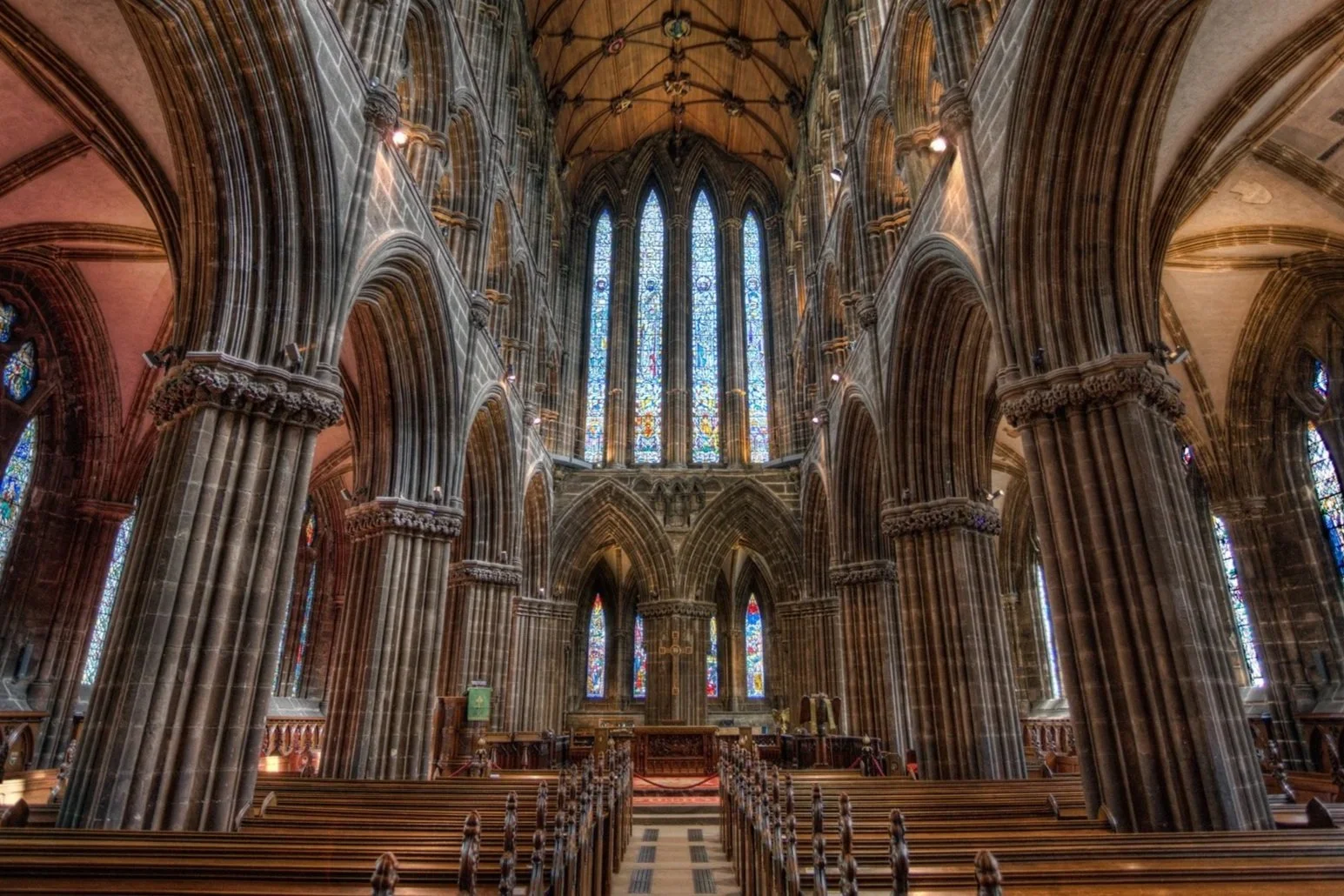
Usually not asked directly, this question of sending missionaries to the U.K. is often the elephant in the room when our family’s call to serve in missions in Glasgow, Scotland, comes up. To be fair, Scotland can seem to be a very church-y place — especially if you don’t live there. For centuries, Christianity’s reach spread far and wide throughout the United Kingdom and, if you were to visit, you’d find you’re never too far from a beautiful old church building with an inspiring history.
Scotland in a “Post-Christian Age”
Watch this five-minute clip from a mini-documentary Joshua filmed while visiting the UK last summer. Andrew Strutzenberg of the Scottish Network Churches paints a picture of the state of the church in Scotland, and Robin McDade of Mosaic Church gives an on-the-ground look at some of the social issues his community faces in Glasgow.
-
Voiceover
One would be forgiven for thinking that the church is doing fine in Scotland.For centuries, Christianity's reach spread far and wide throughout the United Kingdom.
In fact, if you were to visit, you'd find you're never too far from a beautiful old church building with an inspiring history.
Andrew
Here in Edinburgh, we joke that churches are kind of like Starbucks where there's one on every corner and sometimes one in the middle, but often in the city center you walk around these churches and they've closed.And so kind of the joke is, well, that that church is a community center. That church is a skate park. That church is a climbing gym, or that church is a bar.
And sometimes that's meant some people have been very creative about using churches for cafe spaces or art spaces, and still having vibrant worshiping communities in the midst of that.
But others are sadly just closing.
Andrew
In the year 1910, Scotland hosted the World Evangelism Conference, whose tagline was, “To see the evangelization of the whole world in our lifetime.” And so Scotland has in many ways been a leader in evangelism in the global church, with Christianity and planting churches and setting up missionaries.Andrew
[Animated graphic showing a top-down church view starting with 100 circles and decreasing to 2]But unfortunately, in the last 100 years or so, you've seen just a steady decline of people who identify as Christian or, maybe who still identify as Christian culturally, but don't reflect it in terms of their lifestyle choices. The estimates now are about 2% of people in the nation of Scotland are regular church attendees.
Andrew
So 2% of the population of any country actually makes that, technically, an “unreached people group.”Voiceover
In especially affected areas, sectarian and societal divides are the result of religion and politics being both interlocked and set at odds.Robin
Why Glasgow?So there's two sides to the city. So on the one hand, it has an incredibly vibrant cultural scene, whether that's music, whether it's the arts, whether it's science. It's in lots of ways a really vibrant, bangin’ place with unbelievable warmth.
Like, if you go on a bus, please expect people to speak to you because they're gonna. They'll talk to you, they'll be interested and they will want to know about you, they’ll want to help you.
But it also has some of the largest social problems anywhere in the UK. So in the area I live in, there are literally abandoned streets. One bent lamppost with one bulb and the whole street, but most of it's desolate anyway and no one lives there.
Just down the hill, there's a set of stairs that literally will take you nowhere. People start them, they go up and they literally just takes you to a stop.
So there are whole landscapes of like deprivation and neglect. And that's, not unusual.
Voiceover
In Scotland, concentrations of poverty in places like Maryhill show a significant life expectancy gap between most and least deprived areas: about 10.5 years for females, and 13.2 years for males.This is due to inequalities found across income, employment, education, health, access, crime, and housing.
Robin
We're obviously known for crime, as well and things like sectarian problems. Yeah, I would say so. So there's a lot of that as well. And I mean, a lot of that. But there's also a fantastic community spirit where people will band together and they will be a living, breathing presence for something else.You have a lot of both all in the one city. And I remember a comedian saying, “It's the city where you're most likely to get stabbed, but they're obviously the most likely to get you to an ambulance or put you in a cab as well.”
So, I love Glasgow.
Spiritual Poverty beyond “The World”
The Church isn’t buildings — it’s people — and the way of Jesus was never meant to lock step with the goals of Empire. The UK’s complicated history has seen places on the edges like Scotland and Ireland pushed further to the margins (often in the name of religion), and the results are a growing distrust of the institutional church and sectarian divides where religion and politics are both interlocked and set at odds.
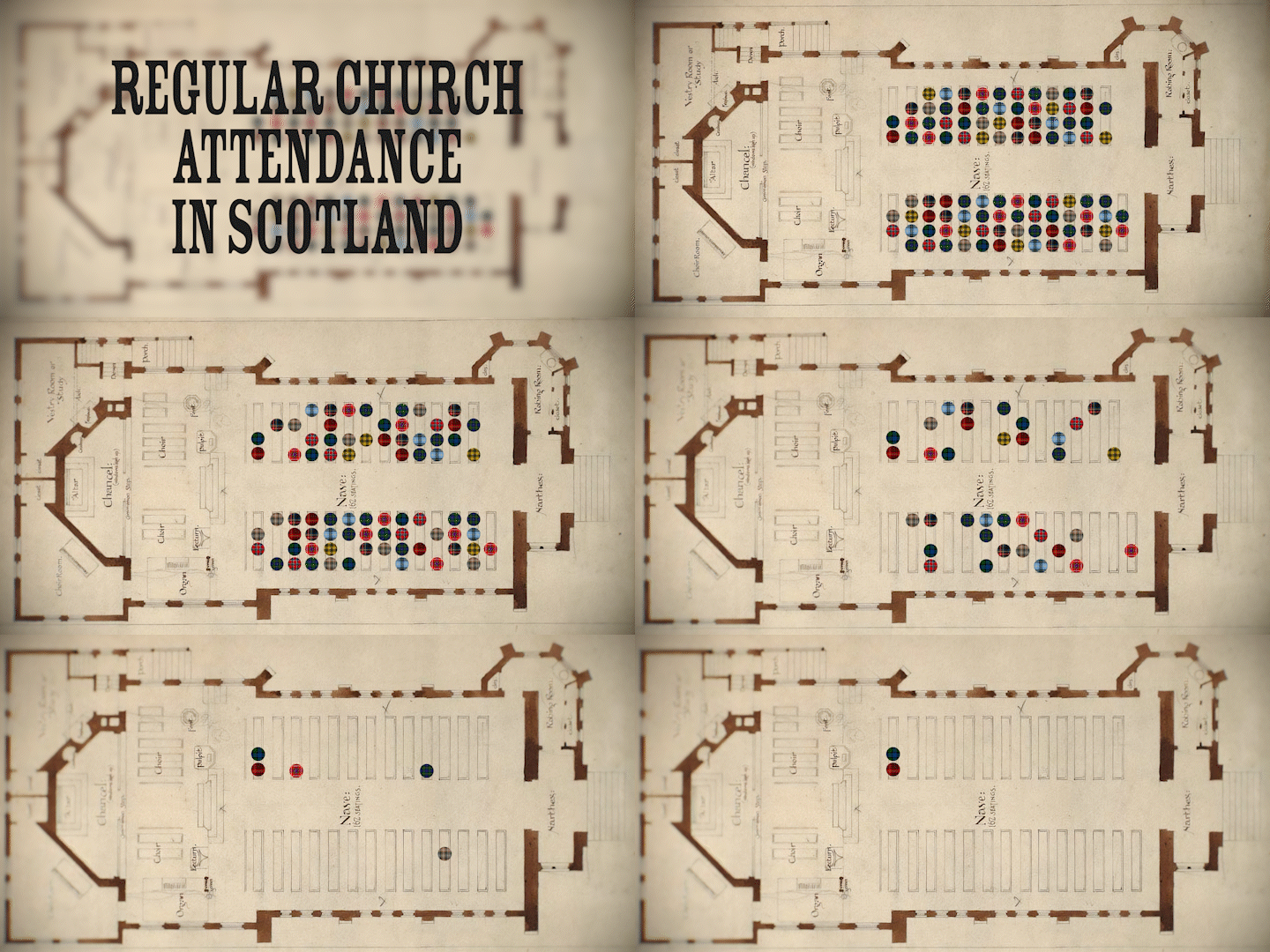
Some reports show church attendance in Scotland has decreased significantly, with 2% of the population now considering themselves “regular attenders” — this metric is defined as “those who attend church three or more times a year.”
“Post-Christian” and “Post-Christendom” are both used to describe places — often in the Western world — where the church has come and gone. While they’re often used interchangeably, their implications couldn’t be more different:
Post-Christian implies that Christianity has run its course and is all but gone in a society that is hostile towards it.
It inherently connects Christianity’s well-being to the power and influence held by the institutional church in society.
It is seen as a loss of identity and may somewhat suggest Christ and his church have no future.
Post-Christendom describes places where the church is no longer located in the center of society.
It implies that the church is in a season of rediscovering what it needs to look like to fulfill its purpose.
It’s hopeful and suggests opportunities to shed the baggage brought on by Christianity’s adoption as the religion of Empire under Constantine (~313 A.D.).
Our many years of cross-cultural service in Europe have shown us time and time again that the second term is far more helpful in understanding what’s going on. Humans are very spiritual creatures and, in places where the institutional church no longer holds all the power, there is a hunger for spiritual nourishment but a lack of vocabulary or healthy faith communities to help people find sustenance.
We call this Spiritual Poverty — people can’t get what they need to live fully.
Radical ministry on the margins
The majority of Jesus’ recorded ministry doesn’t take place in palaces or the homes of the powerful, but in meeting the needs of people on the margins of society. It flies directly in the face of “trickle-down ministry,” which aims to convert the most powerful and influential voices in society so that they can then convert those “under” them.
“In Scotland, concentrations of poverty in places like Maryhill show a significant life expectancy gap between most and least deprived areas: about 10.5 years for females, and 13.2 years for males.”
This creates dissonance when people compare places like Glasgow, which has a strong tourism industry, to other places where the social needs are more easily perceived (or assumed). Reflecting on our own experiences, folks struggle to think in terms of ministry needs when they’re looking at places as vacation destinations.
As the video illustrates, Glasgow is an amazing city with huge challenges. Unless things change between now and deployment, our plan is to move to Maryhill, an area in northwest Glasgow, and find ways to help with the social good there.
What does hope look like in Post-Christendom?
This post is part one of a three-part series through which we will build a case for the need for missions in Scotland. Although part one paints a picture that feels a bit heavy, the next part explores how hope can look like pub trivia, country-western line dancing, and radical inclusion.
You can make a difference: become a ministry partner and support a better future for the church in Scotland.
Series: A Case for Scotland