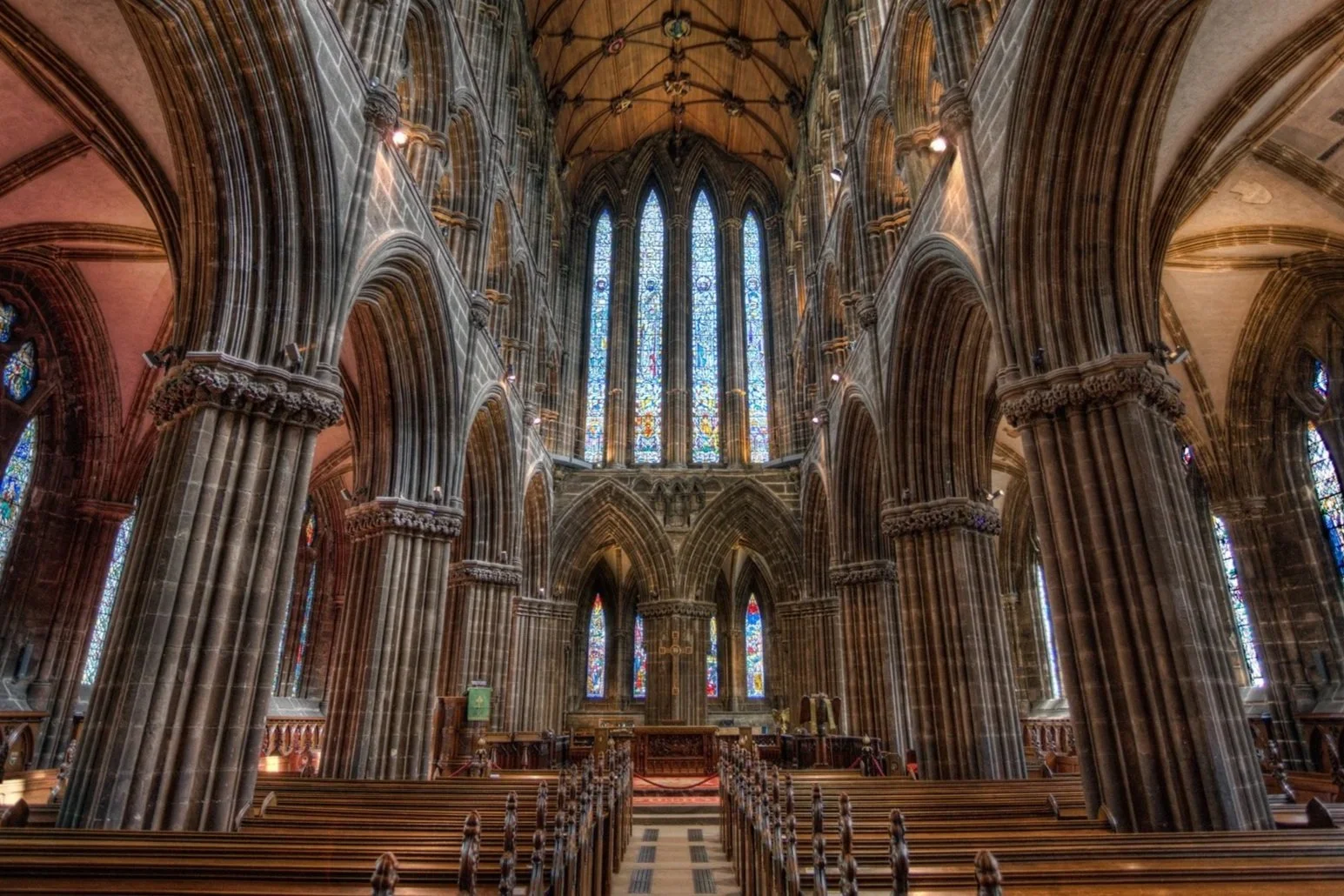
Our last post detailed Scotland’s move from being a global leader in sending missionaries into the world to being, technically, an “unreached people group.”
However, it would be a misnomer to say the future of the church in Scotland is hopeless. In a part of the world where many churches are closing, Glasgow’s Mosaic Church has been connecting with folks who wouldn’t be caught dead in a conventional church setting.
Mosaic builds bridges by being a truly inclusive church community that doesn’t constrain itself to what church is “supposed to look like” — and they’ve been doing it for over 20 years.
Mosaic’s unique approach
Watch this three-minute clip from a mini-documentary Joshua filmed while visiting the UK last summer and catch a glimpse of what “a church for everyone” means through the words of Robin and Viola McDade, Mosaic Church elders.
-
Voiceover
In polarized spaces where many churches double down on old formulas for "doing church," there is a counter current of communities being drawn towards the compelling alternative found in the hope-filled, Jesus-centered faith offered by the Anabaptist Mennonite tradition.This tradition was once a fringe movement, persecuted by Catholics and Protestants alike. Now it has become an avenue of reconciling people with their longing for Jesus and Christian community, despite distrust of organized religion.
Mosaic church, who have found their way into the Anabaptist Mennonite story, embodied this type of presence in Glasgow.
Robin
Who are the people who come? Maybe the rejects? They're the kind of folks who they've either rejected church or church has definitely rejected them for some reason or another, who've looked for a life raft or somewhere where they can do things.Like they're actually allowed to think, you're actually allowed to question and doubt. You're actually allowed to explore your faith. You're not going to be put in a box or put to a side, or given a label
Viola
I would say we've got probably quite a few people that are neurodiverse, and therefore maybe don't always fit into spaces like where you have to act in a certain way. I think we're quite welcoming to that and we can make allowances for that. Like if somebody is quite noisy, that's maybe less disturbing with us than it is somewhere else.So we've got those kind of people. And then I would say there are a lot of people who just got really hurt in church before, and some people say that Mosaic is their last chance at church. Like, if that doesn't work out, they wouldn't go anywhere else.
Robin
Well, I didn't plan to be in Mosaic. I had renounced faith at that point and was on the way out. But I had a friend speaking at Mosaic for the first time after the death of his boy about what faith might mean to him now.I went and the whole meeting was a disaster from top to bottom. We were locked out of the building. The couple who were in charge at that time were having a fight in the street. And I loved all of that because it meant no one was paying any attention to me.
We did end up going to their home, with one of them in a decided huff and one of them victorious. And, yeah they worshipped and something in my heart broke, and I've not left yet. That was 20-something years ago, so...
Viola
I guess we are valuable, but I-- Just on the ground, it feels very messy and very often very frustrating. So, yeah, think of us as something very real and grounded. Not some sort of amazing vision that is perfect. We’re in no way that.
Lessons for North American churches
In places where the church has been weaponized, polarized, and increasingly out of touch, the Anabaptist-Mennonite perspective continues to offer a third-way faith perspective that connects with folks who feel they don’t fit anywhere else.
Why does Anabaptism connect with people?
-
Anabaptism is a 16th-century Protestant Reformation movement emphasizing believer’s baptism, voluntary church membership, and strict separation of church and state. Emerging as a "radical" wing, they rejected infant baptism, advocating for adult confession of faith.
Key tenets include pacifism, non-violent resistance, and simple living, often followed by modern Mennonites, Amish, and Hutterites.
-
Christendom refers to that predominantly white, Western form of Christianity that has been conquesting the world under the banner of salvation. It’s often historically marked by Emperor Constantine declaring Christianity as the official religion of the Roman Empire in the 4th century.
Some of Anabaptism’s defining characteristics include a Jesus-centered, community-oriented disposition that emphasizes faith is to be lived out. Anabaptism grew out of a resistance to the power-oriented trappings of Christendom and the top-down hierarchies found in many church traditions.
By its nature, Anabaptism is anti-Christian Nationalism and, in sectarian contexts, that matters a lot. While Reformers like Martin Luther were trying to bring the church back to the church of Empire under Constantine, the Anabaptists understood that’s not taking things back far enough. They have a 500-year-old tradition of looking to the pre-Christendom believers and their communities as guides to the way forward.
In other words, the church in the book of Acts is more relevant now than ever.
The future of the Western church is inclusive
Mosaic Church takes all of this one step further and insists on a posture of radical inclusion. When they say “all are welcome,” they don’t just stop with embracing the LGBTQIA+ community, which is what much of the inclusion conversation in North America has been coded to refer to. They are also a church for the neurodiverse and societal scallywags that couldn’t function well in a conventional church setting.
Jesus’ table is an open invitation to everyone — from tax collectors and prostitutes to Judas. When we model that kind of inclusion in our own faith communities, we broadcast to the world that Jesus is for everyone, community is for loving, and judgment is for God.
Post-Christendom: a double-edged sword
In post-Christendom, communities like Mosaic Church are at the forefront of exploring and sketching out what the next incarnations of the Western church will look like. They’re also faced with many obstacles that limit their impact. Namely, finding the capacity to meet the needs they encounter.
Our next post explores what we’re doing to respond to that. Want to see how this vision unfolds? Join our newsletter!
Series: A Case for Scotland